TL;DR: In California, verify a plumber’s license by searching their name or license number on the CSLB’s Check License site. A valid license shows an active C-36 classification (or C-36 as part of a broader classification), a current bond, and workers compensation coverage if they have employees. Skipping this step on permitted work like a repipe, sewer replacement, gas line, or water heater changeout means you have no recourse if the job fails inspection or the work causes damage.
If you’re about to sign a contract for a whole-house repipe, a gas line extension, or a water heater changeout and something about the quote feels rushed, the fastest thing you can do right now is open a new tab and run the contractor’s license number through the state’s lookup tool. It takes less time than reading this sentence twice. Below is exactly what to check, what each field on the license record actually means, and why it matters more on some jobs than others.
How do you check if a plumber is licensed in California?
You verify a California plumbing license by searching the contractor’s name or 8-digit license number on the Contractors State License Board’s Check License Online tool. The record shows the license status (active, expired, suspended, or revoked), the classification held, the bond amount, and whether workers compensation insurance is on file.
Go to CSLB’s Check License page and enter either the business name or the license number printed on the estimate. If the search returns “no results” for a name that’s close but not exact, try the license number instead; DBAs and business names sometimes differ from what’s on the quote. A legitimate contractor will give you the license number without hesitation, before you ask twice.
Also check the “Discipline” tab on the same record. CSLB posts citations, suspensions, and revocations there. A clean record with no open complaints is a good sign; a license that’s active but carries recent discipline deserves a direct question before you book the job.
What is a C-36 plumbing contractor license, and does your plumber actually need one?
A C-36 is California’s specialty contractor classification for plumbing work: installing, repairing, and maintaining water, gas, and drain-waste-vent piping systems. Most residential plumbers you’d hire for a repipe, sewer line, gas line, or water heater job should be holding a C-36, either alone or alongside a broader classification like a B (general building).
The classification matters because it’s scope-specific. A contractor whose only license is a C-20 (HVAC) isn’t licensed to run gas supply lines to a new water heater, even if they’re perfectly competent at furnace work. Likewise, a general B contractor taking on plumbing-heavy scope as an incidental part of a larger remodel is a different legal situation than a standalone C-36 plumbing job. If the quote you’re looking at is purely plumbing work, the classification on file should say C-36. If you’re not sure what classification covers your job, the CSLB’s Hire a Contractor guide breaks down what each classification actually authorizes.
For related soft-skills vetting, like how many quotes to get and what questions separate a good plumber from a forgettable one, see How to Find a Good Plumber. This post is strictly about the license mechanics; that one is about everything else you should ask.
Is the plumber bonded and insured, and why does that matter more than you think?
A bonded plumber carries a surety bond on file with CSLB (currently a minimum of $25,000 for most classifications), which gives you a path to recover money if the contractor violates license law on your job. Insurance, specifically workers compensation, protects you from liability if a worker is injured at your home.
The bond isn’t insurance for shoddy work; it’s a financial guarantee tied to license law violations, and claims against it are capped and processed through CSLB, not a quick refund. Workers comp is the more practical protection for a homeowner: if an uninsured worker is hurt on your property, you can be pulled into that liability. The CSLB record shows whether workers comp is on file, exempt (the contractor has no employees), or lapsed. If it says exempt, ask directly whether the crew on your job is employees or subcontractors, since that status can change between projects.
Ask for a certificate of insurance showing general liability coverage too. It’s a one-page document and any established contractor keeps one on hand to email you before the job starts.
Why does the license matter more on repiping, gas lines, and water heater changeouts than on a simple faucet swap?
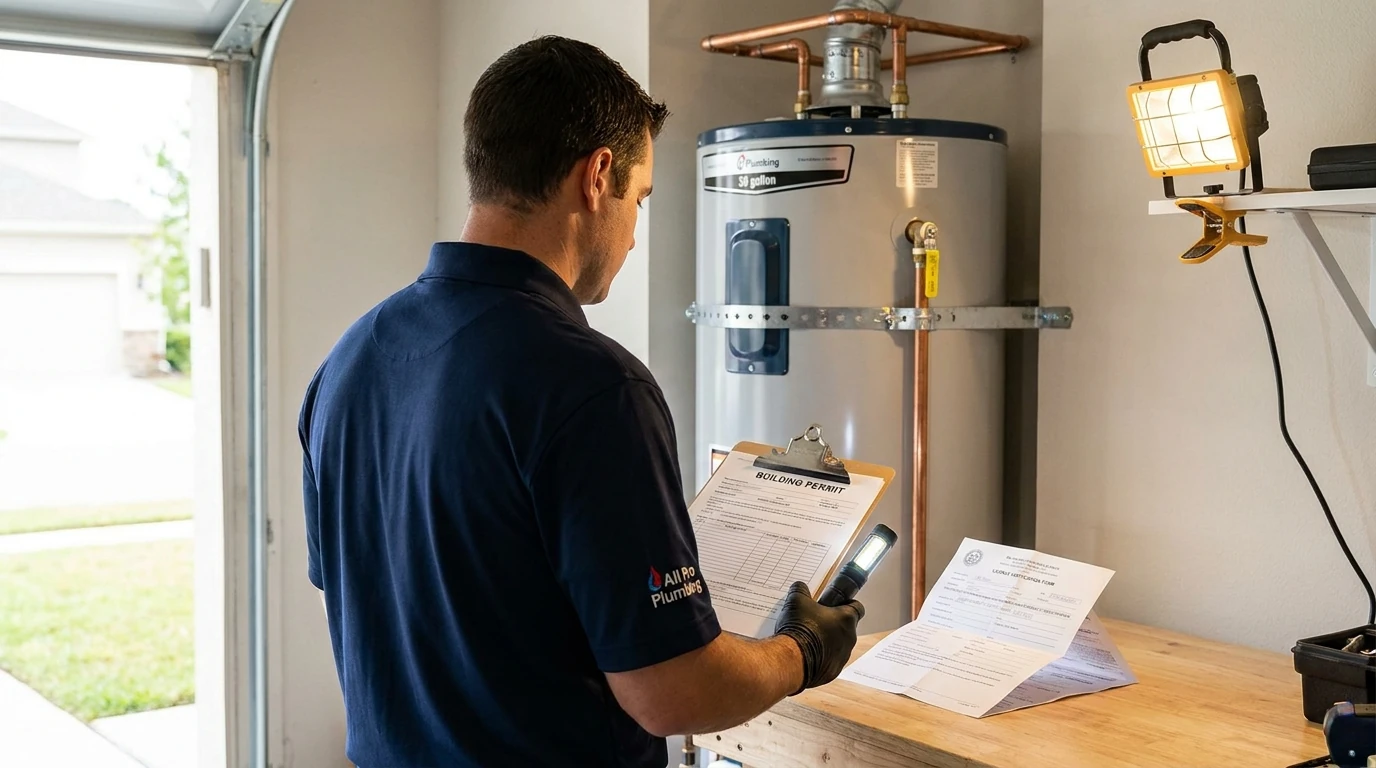
License status matters most on work that requires a permit and a final inspection, because an unlicensed or unpermitted job can leave you with no legal record the work ever happened correctly. A whole-house repipe, a sewer line replacement, a gas line extension, and most water heater changeouts all fall into this category under the Uniform Plumbing Code as adopted locally.
A licensed, permitted job means an inspector checks the pressure test on new supply lines, the slope and venting on a repiped drain, or the bonding and shutoff access on a new water heater before it’s signed off. That inspection record follows the house; it matters at resale, and it matters if something fails later and you need to show the work was done to code. An unpermitted repipe or gas line, even one that’s functioning fine today, can become a disclosure problem when you sell, and an insurer can deny a claim tied to unpermitted work.
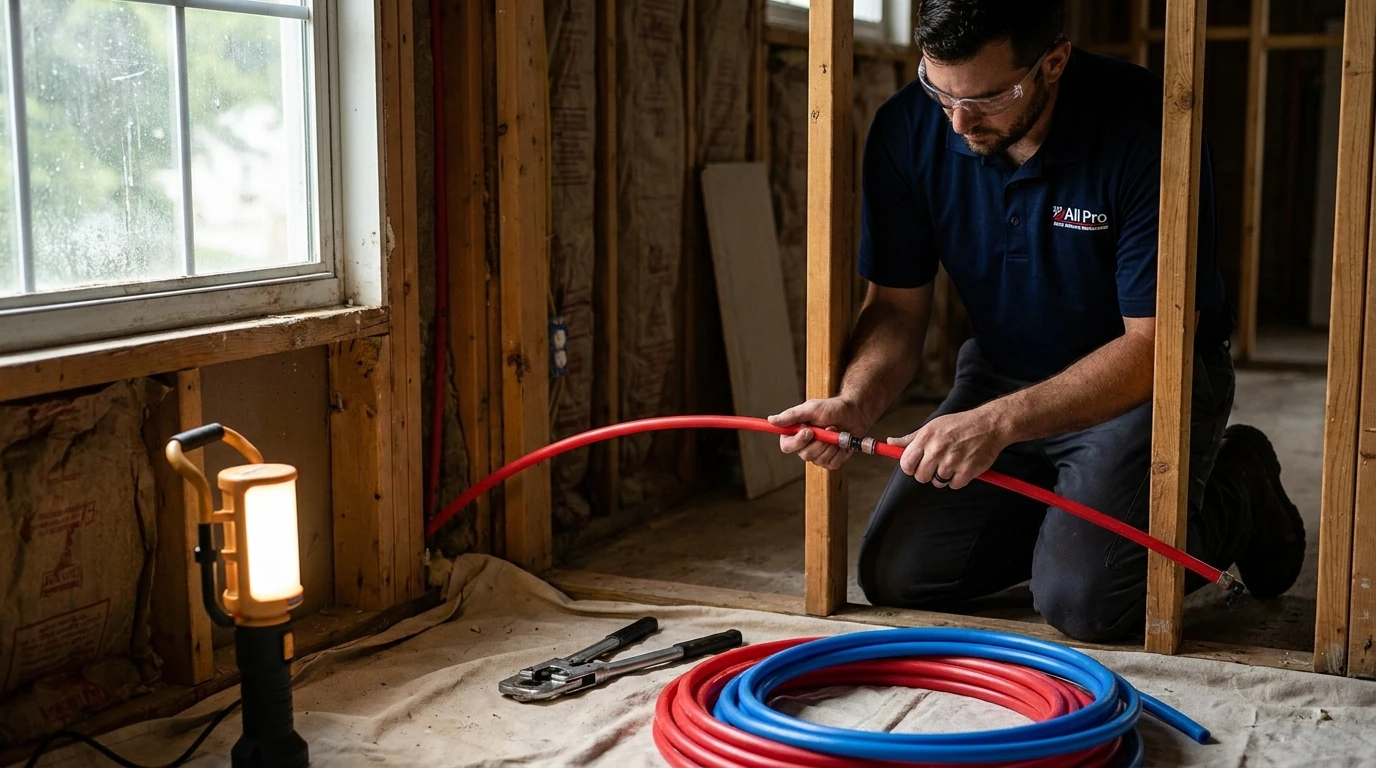
This is also where a bad outcome gets expensive fast. A failed repipe joint or a water heater connection that lets go overnight doesn’t just mean a repair bill; it can mean soaked drywall, warped flooring, and a mold conversation three days later. If that happens and water spreads beyond the pipe itself, drying out the structure is a separate scope from fixing the plumbing. All Pro Plumbing Heating and Air’s sister company, ProRestoration Services, handles that drying and rebuild work, which is the idea behind “One Call Does It All”: one phone call covers the plumbing fix and the water damage cleanup instead of juggling two separate contractors while your living room sits wet.
What happens if you hire an unlicensed plumber in California?
Hiring an unlicensed plumber for work that requires a license strips away your legal protections, including the right to sue for faulty work in most cases and your ability to collect from CSLB’s recovery fund. You’re also on the hook if a worker gets hurt on your property, since there’s no bond or insurance backing them.
California law bars unlicensed contractors from even filing a lawsuit to collect payment for work requiring a license, which tells you how seriously the state treats it. For you as the homeowner, the bigger risk is usually quieter: a cheap unlicensed repipe or gas connection that fails inspection, gets flagged at resale, or simply isn’t built the way code requires, with nobody accountable to fix it once the invoice is paid.
Before you sign anything, ask the plumber for their license number, run it through the CSLB lookup yourself, and confirm the classification matches the job. Request a written estimate that includes the license number, the scope of work, and whether a permit will be pulled. That’s a two-minute check that protects a five-figure job.
If you’re weighing a repipe, a gas line project, or a water heater installation and want a written quote that spells out the permit and scope clearly, request a quote and ask every item on this list before the crew shows up.
About All Pro Plumbing Heating and Air
All Pro Plumbing Heating and Air provides 24/7 plumbing, heating, and air conditioning service across Bakersfield and the surrounding Kern County communities, handling everything from emergency pipe repair to whole-house repiping, gas line work, and water heater installation. When a plumbing failure causes water damage, their sister company, ProRestoration Services, handles the drying and rebuild, so the same phone call covers both the fix and the cleanup.