TL;DR: A single slow shower drain is almost always hair and soap scum trapped in the trap or the first few feet of pipe, and a $10 zip tool or a flanged plunger clears most of them. If the shower backs up at the same time as the toilet or the tub, that points to a clogged main line or branch drain, not a simple shower clog, and it calls for a plumber with a cable machine or hydro jetter rather than another bottle of drain cleaner. Bakersfield’s hard municipal water speeds up the buildup that causes repeat clogs, which is why softeners come up so often in this conversation.
If you’re standing in ankle-deep water right now in a Westchester or Oleander bathroom and the shower just will not drain, here’s the fast version: turn off the water, do not pour anything down the drain, and check whether the toilet or tub is also acting up. One slow fixture is a weekend project. Multiple fixtures backing up together is a main line problem that needs a plumber today, not a bottle of Drano.
Should I call a plumber, or try to clear it myself first?
Call a plumber if more than one drain is affected, if water is coming back up from a different fixture, or if your own attempts haven’t moved the clog after two tries. Try it yourself first if only the shower is slow and nothing else in the house is acting up.
A single clogged shower is a local blockage, usually sitting in the drain basket, the trap, or the first 3 to 5 feet of pipe where hair, soap scum, and skin oils bind together. That’s a fair DIY fix. A shower that gurgles when the toilet flushes, or backs up when the washing machine drains, means water is finding a shared pipe downstream and hitting a blockage there instead. That’s a branch or main line issue, and no amount of plunging the shower will reach it.
All Pro Plumbing Heating and Air runs 24/7 dispatch for exactly this reason: a main line backup doesn’t wait for business hours, and the longer it sits, the more likely it is to push wastewater back up through a lower fixture.
My shower drain is clogged with hair, what should I try first?
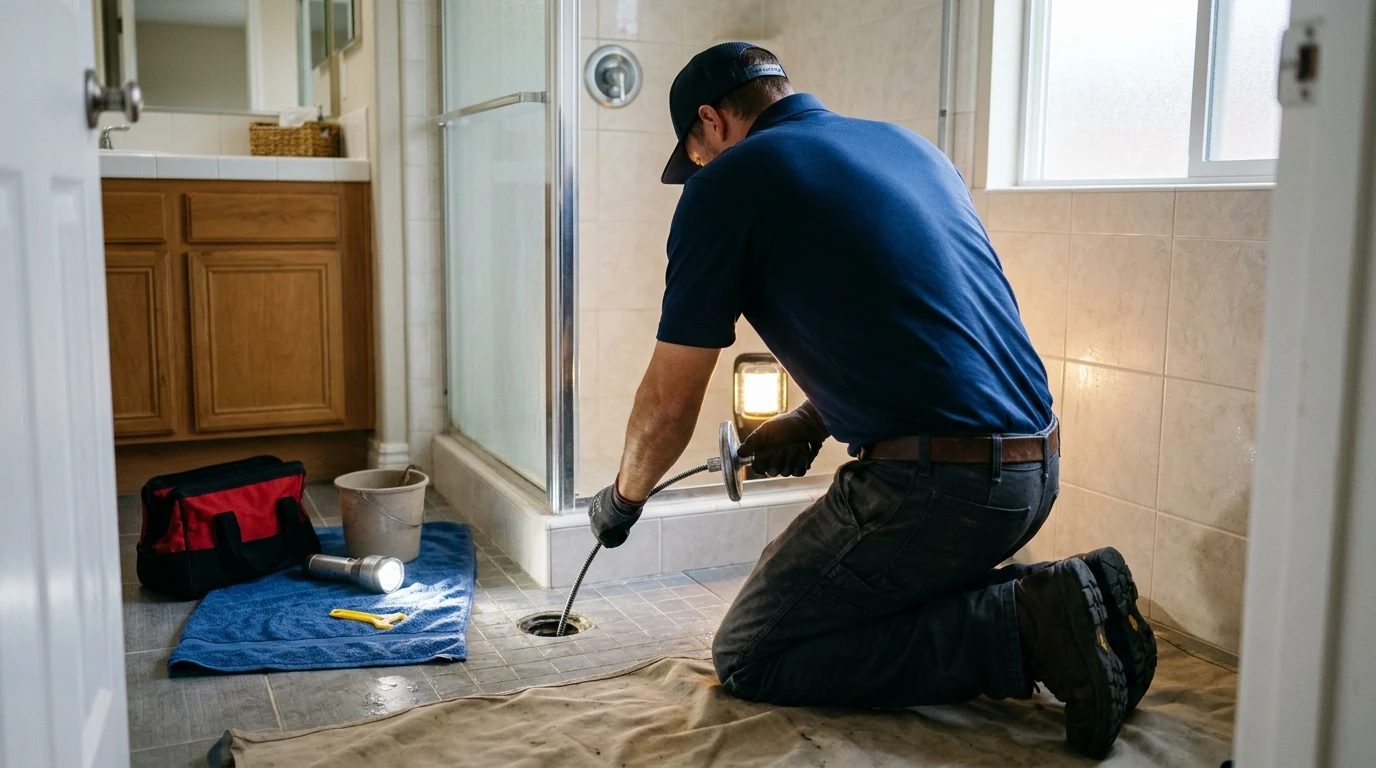
Pull the drain cover, then use a plastic zip tool (a flexible plastic strip with barbs) to hook and pull out the hair mat sitting just below the opening. This clears the vast majority of slow shower drains in under five minutes.
If the zip tool doesn’t reach the clog or doesn’t pull enough out, try a flanged plunger over the drain with a few inches of water already in the tub, pumping firmly 10 to 15 times. For a stubborn clog past the trap, a hand-crank hair snake (not the same as a toilet auger) run down the drain line can grab what the zip tool missed. Skip the chemical drain cleaner. It’s a frequent topic in our guide comparing chemical drain cleaners vs calling a plumber, and the short version is that sodium hydroxide-based cleaners generate heat that can soften PVC fittings and do nothing for a clog that’s actually biofilm and mineral scale instead of hair.
Why is standing water in my shower worse than a slow drain?
Standing water that won’t drain at all, rather than just draining slowly, usually means the blockage is more complete and farther down the line, and pouring chemical cleaner into standing water makes it worse because the caustic liquid just sits on top without reaching the clog.
Stop running water into the drain the moment you notice it’s not clearing. Adding more water (another shower, a load of laundry, running the sink) just raises the water level and increases the odds it backs up somewhere else in the house. If a chemical cleaner has already been poured in, don’t run a plunger over it; the chemical can splash back and burn skin or eyes.
This is also where Bakersfield’s water quality works against you. Kern County’s municipal supply is some of the hardest water in California, and the dissolved minerals in it build up inside drain lines as scale, narrowing the pipe over years and giving hair and soap scum something to catch on. A house in Oleander, Westchester, or East Bakersfield built before 1970 is more likely to have older, narrower cast-iron drain lines on top of that mineral buildup, which is part of why the same shower tends to clog again and again. A whole-house water softener doesn’t clear an existing clog, but it does reduce how fast new scale forms in the lines going forward.
Both my shower and toilet are backing up, what does that mean?
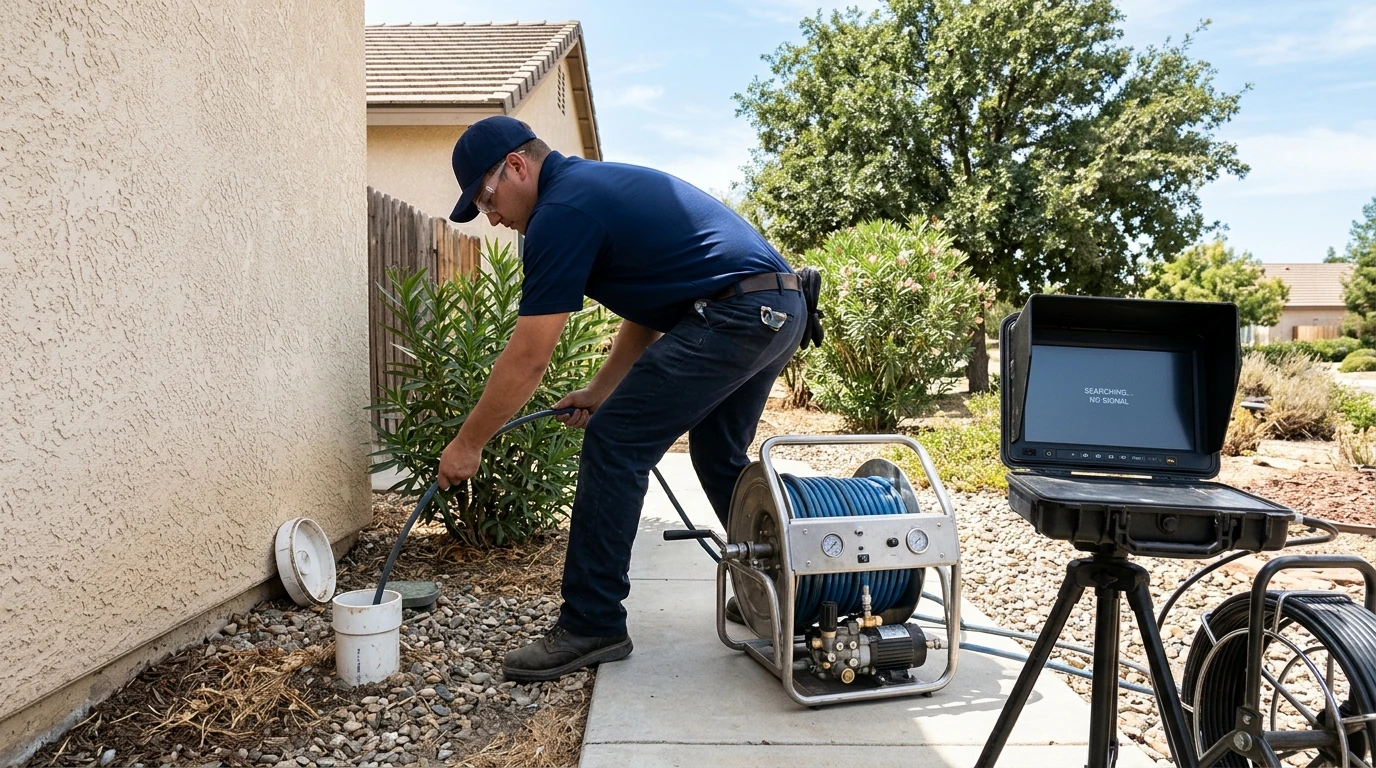
Shower and toilet backing up together almost always means the clog sits in a shared branch line or the main sewer line, not in the shower drain itself, and it needs a plumber with sewer-camera and cabling equipment rather than a DIY tool.
When wastewater has nowhere else to go, it takes the path of least resistance, and that’s often the lowest fixture in the house, frequently a shower or tub. If you’re seeing water or sewage come up through the shower drain when you flush the toilet or run the washer, treat it as a main line issue and stop using water in the house until a plumber has looked at it. Our sewer backup guide walks through the full decision tree for that scenario in more detail. If any wastewater has already spread onto the bathroom floor or into an adjoining room, our sister company, ProRestoration Services, handles the drying and cleanup once the line itself is cleared, so you’re not managing two separate contractors for one bad afternoon.
What does a plumber actually do to clear a shower drain?
A plumber either runs a motorized cable (snaking) through the line to cut and pull the clog, or uses hydro jetting (a high-pressure water nozzle) to scour the full diameter of the pipe clean, and the choice depends on how old the clog is and what’s built up inside the pipe.
Snaking is the standard first move for a straightforward hair-and-soap clog: a cable with a cutting or grabbing head feeds down the line, breaks up the blockage, and pulls debris back. Hydro jetting goes further, blasting water at high pressure to strip mineral scale, grease, and soap film off the inside walls of the pipe rather than just punching a hole through the clog. In a city with water as hard as Bakersfield’s, jetting is often the better call for a drain that’s clogged for the second or third time, because it actually removes the scale layer the hair is catching on instead of leaving it to collect again in a few months. Our breakdown of hydro jetting vs snaking covers which one fits different situations.
What does it cost to clear a shower drain in Bakersfield?
Clearing a single shower drain with a standard snake typically runs toward the lower end of local drain-clearing pricing, while hydro jetting and main-line work cost more because of the specialized equipment involved.
Exact numbers depend on access, how far the clog sits from a cleanout, and whether it’s a one-time clog or a pattern that points to scale buildup. Rather than repeat the full breakdown here, our drain cleaning cost guide for Bakersfield and our plumber cost to unclog a drain post lay out current price ranges by clog type, and a written quote before work starts should spell out which method is being used and why.
If a zip tool and a plunger haven’t moved your shower drain, or if another fixture in the house is acting up at the same time, schedule a drain inspection with All Pro Plumbing Heating and Air rather than reaching for a second bottle of chemical cleaner. One call covers the clog itself; if it turns into a bigger line issue or any water has already spread past the drain, the same team can route you to the cleanup without bringing in a separate company.
About All Pro Plumbing Heating and Air
All Pro Plumbing Heating and Air is a licensed plumbing, heating, and air contractor serving Bakersfield, CA (license #960566), available 24/7 for drain, sewer, water heater, and HVAC calls across Kern County. Written by Jack Bispo with the All Pro team, drawing on day-to-day drain and sewer service calls across Bakersfield’s mix of pre-1970 cast-iron drain lines and newer tract construction.
Need help now? Call All Pro Plumbing Heating and Air at (661) 863-9242.