TL;DR: The best water softener for Bakersfield is a salt-based (ion-exchange) system sized for at least 20 grains per gallon (gpg) of hardness, since the city’s municipal supply regularly tests in the 15-20+ gpg range. A 32,000 to 48,000-grain system handles most single-family homes. Salt-free “conditioners” are easier to maintain but generally underperform once hardness climbs past 15 gpg, which most of Bakersfield already exceeds. Installed cost typically runs $1,800 to $3,500 for a whole-house system.
If you’re scrubbing a chalky white crust off your shower head every few weeks, or your water heater just failed at year six instead of year twelve, you’re living the Bakersfield water story. This city sits on some of the hardest municipal water in California, and it shows up as scale on fixtures, cloudy glassware, dry skin, and shortened equipment life long before it shows up as a surprise bill. Here’s how to pick a softener that actually solves it, not one sized for an easier city’s water.
What’s the best water softener for Bakersfield’s hard water?
For most Bakersfield homes, a salt-based ion-exchange softener sized to at least 20 gpg of hardness is the system that actually works. It is the only common residential technology that removes calcium and magnesium from the water rather than just altering how those minerals behave.
Salt-free “conditioners” and magnetic descalers are marketed as low-maintenance alternatives, and they hold appeal because there’s no salt to haul or brine tank to clean. The tradeoff: they use template-assisted crystallization to change the mineral’s shape so it’s less likely to stick to pipe walls, but they don’t remove hardness. Independent lab testing and most manufacturer literature put their effective range below 15 gpg. Bakersfield’s municipal water routinely tests above that, so a conditioner alone usually isn’t enough here.
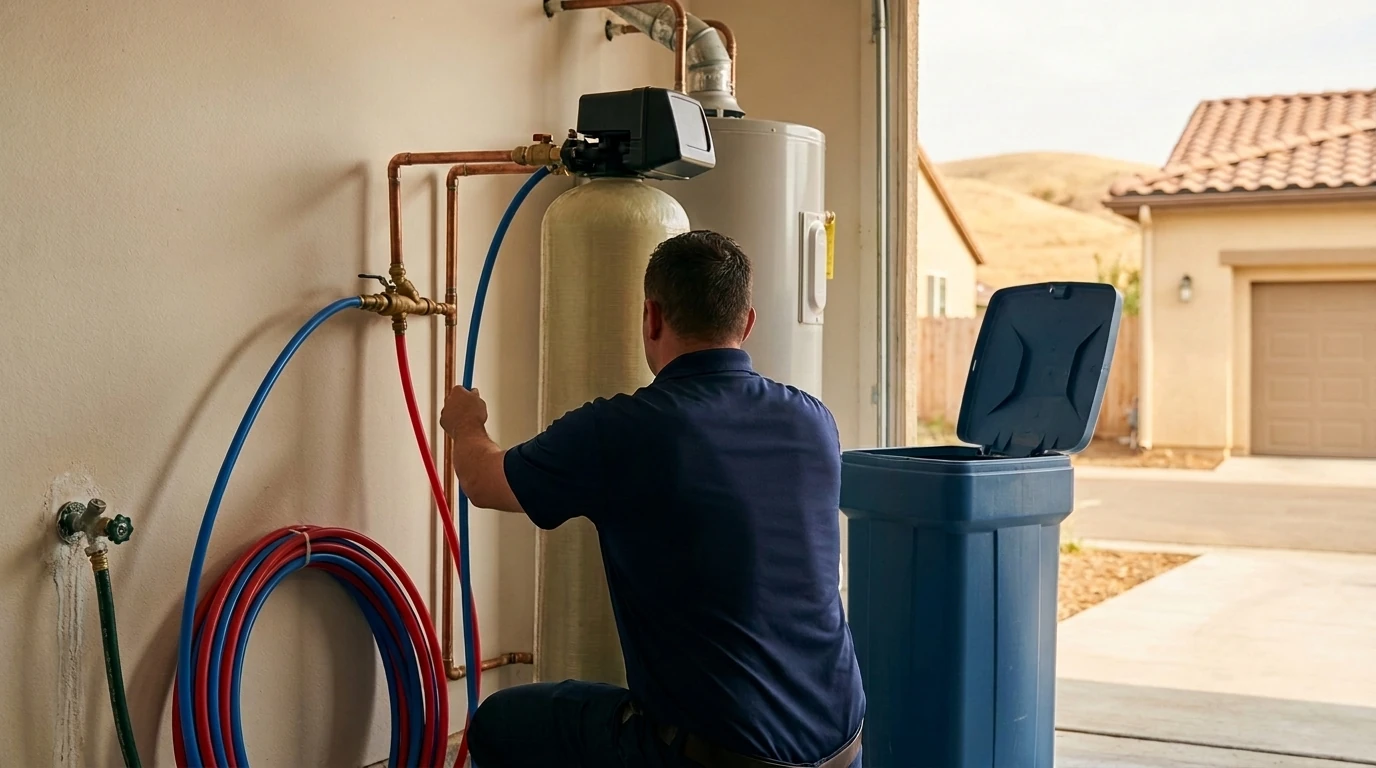
Most homeowners pair a whole-house softener with a separate under-sink reverse osmosis or carbon filter for drinking water. The softener protects pipes, fixtures, and appliances; the filter handles taste and chlorine at the kitchen tap. All Pro’s water softener and filtration installs typically cover both.
How many grains per gallon does a Bakersfield home actually need?
Size a softener by multiplying your water’s hardness in grains per gallon by your household’s daily water use, then choose a unit with enough capacity to run roughly a week between regenerations. For a typical Bakersfield household, that usually lands on a 32,000 to 48,000-grain system.
Bakersfield’s water hardness commonly runs 15 to 20+ gpg depending on the well field feeding your part of the city, which already qualifies as “very hard” (anything above 10.5 gpg does). Homes on blended well water in areas like Rosedale or Shafter can see readings even higher. A family of four using roughly 300 to 400 gallons a day at 18 gpg needs meaningfully more softening capacity than the same family on 8 gpg water in a milder-hardness market, so undersizing is the single most common mistake homeowners make buying off a big-box shelf. Oversizing by one tier (32,000 instead of 24,000 grain, for example) costs little extra and buys real margin against hardness spikes.
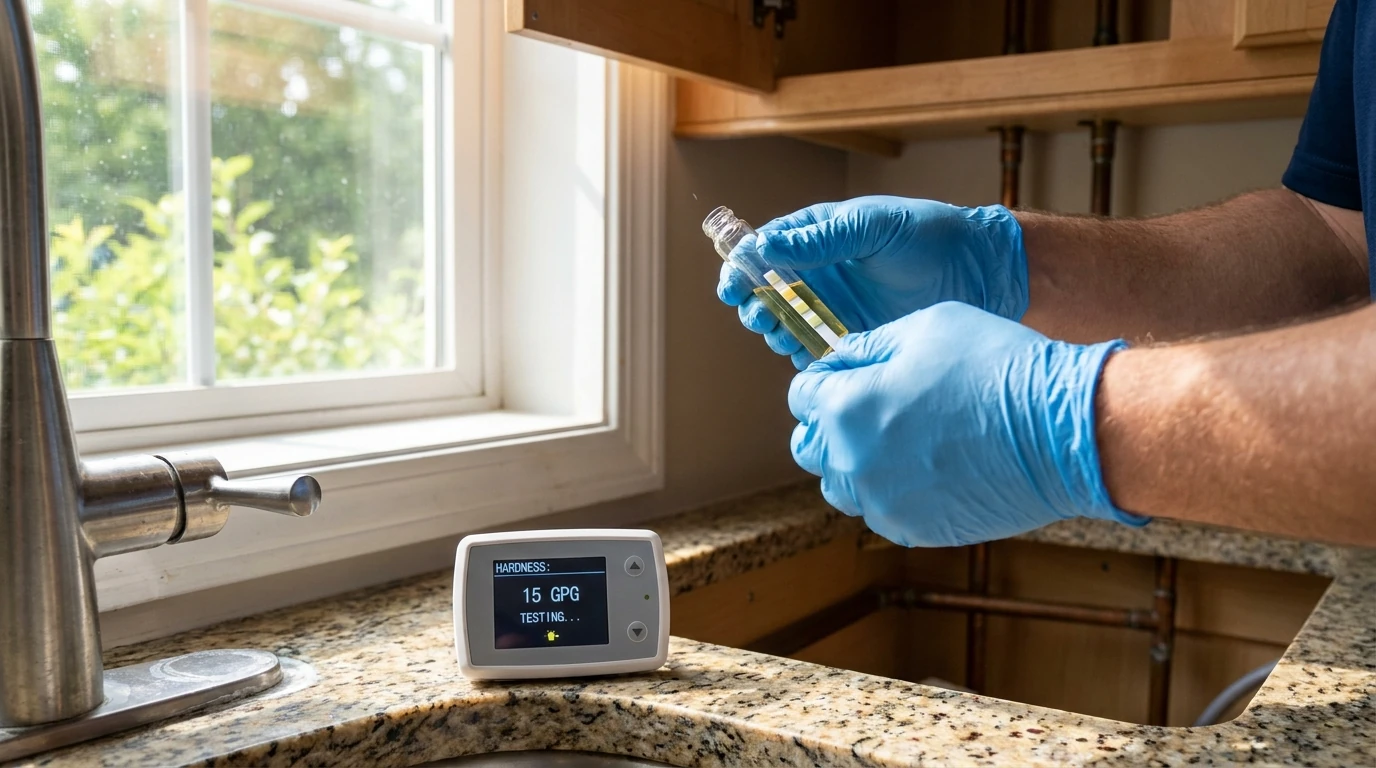
A technician can confirm your exact hardness with a quick test rather than relying on the city average, since blending, household size, and irrigation habits all shift the real number.
Salt-based vs salt-free: which one holds up against water this hard?
Salt-based softeners win on performance at Bakersfield’s hardness levels; salt-free conditioners win on convenience but trade away actual softening capacity. Pick based on which problem you’re solving.
If you’re seeing scale on shower doors, white rings in the toilet bowl, soap that won’t lather, or a water heater failing years ahead of schedule, you need hardness removed, not just restructured, which means ion-exchange. If your water is only moderately hard and your main concern is slowing down pipe scale without salt deliveries, a conditioner can be reasonable, but that’s rarely the Bakersfield case.
There’s also a maintenance tradeoff worth being honest about. Salt-based systems need salt (or potassium chloride for a lower-sodium household) refilled every 6 to 8 weeks for an average family, and they use a small amount of water during each regeneration cycle. Conditioners need essentially no upkeep. For Bakersfield’s hardness, most homeowners find the salt runs a worthwhile trade against replacing a water heater every 6 years instead of every 10 to 12.
What does a water softener cost installed in Bakersfield?
A properly sized whole-house salt-based softener typically runs $1,800 to $3,500 installed, depending on grain capacity, valve type (basic timer versus metered/demand-initiated regeneration), and how the loop ties into your existing plumbing. Metered valves, which regenerate based on actual water use rather than a fixed schedule, cost more up front but waste less salt and water over the system’s life.
Homes on slab foundations, which make up a large share of Bakersfield’s pre-1970 housing stock in neighborhoods like Oleander, Westchester, and East Bakersfield, sometimes need a short reroute to bring the softener loop to a garage or exterior wall rather than tying in under a slab. That adds modestly to labor but is a one-time cost, not a recurring one. Adding an under-sink reverse osmosis unit for drinking water typically runs another $400 to $900. A written quote should spell out grain capacity, valve type, warranty length on the resin tank and control head, and whether the first bag of salt is included.
When should you call a pro instead of a big-box kit?
Call a licensed plumber when you need the system sized to your actual tested hardness and tied into your home’s plumbing correctly, which a shelf-bought kit’s generic sizing chart can’t do for Bakersfield’s above-average hardness. A professional install also gets the bypass valve, drain line, and brine overflow routed to code, which matters at resale.
It’s also worth having a plumber check your water heater while they’re there. Scale buildup from years of untreated hard water insulates the tank’s heating element or burner, forcing it to run longer and often cutting years off its service life; see our guide on water heater lifespan for how to tell if yours is already showing the signs. Softened water slows that buildup going forward, and per EPA WaterSense guidance, reducing scale also helps water-efficient fixtures and appliances hold their rated performance longer.
All Pro Plumbing Heating and Air tests hardness, sizes the system to your actual household use, and installs the loop in one visit, true to the company’s One Call Does It All approach to getting a job handled without a second truck roll for something that should have been covered the first time. Call All Pro Plumbing Heating and Air at (661) 863-9242 to schedule a water hardness test and softener quote, or request one online.
About All Pro Plumbing Heating and Air
All Pro Plumbing Heating and Air is a licensed plumbing, heating, and air contractor (License #960566) serving Bakersfield, CA and surrounding Kern County communities around the clock. This guide was prepared with the company’s water treatment technicians by Jack Bispo. Their crews install and service water softeners and filtration systems, water heaters, and full plumbing and HVAC systems across homes dealing with some of the hardest municipal water in the state.